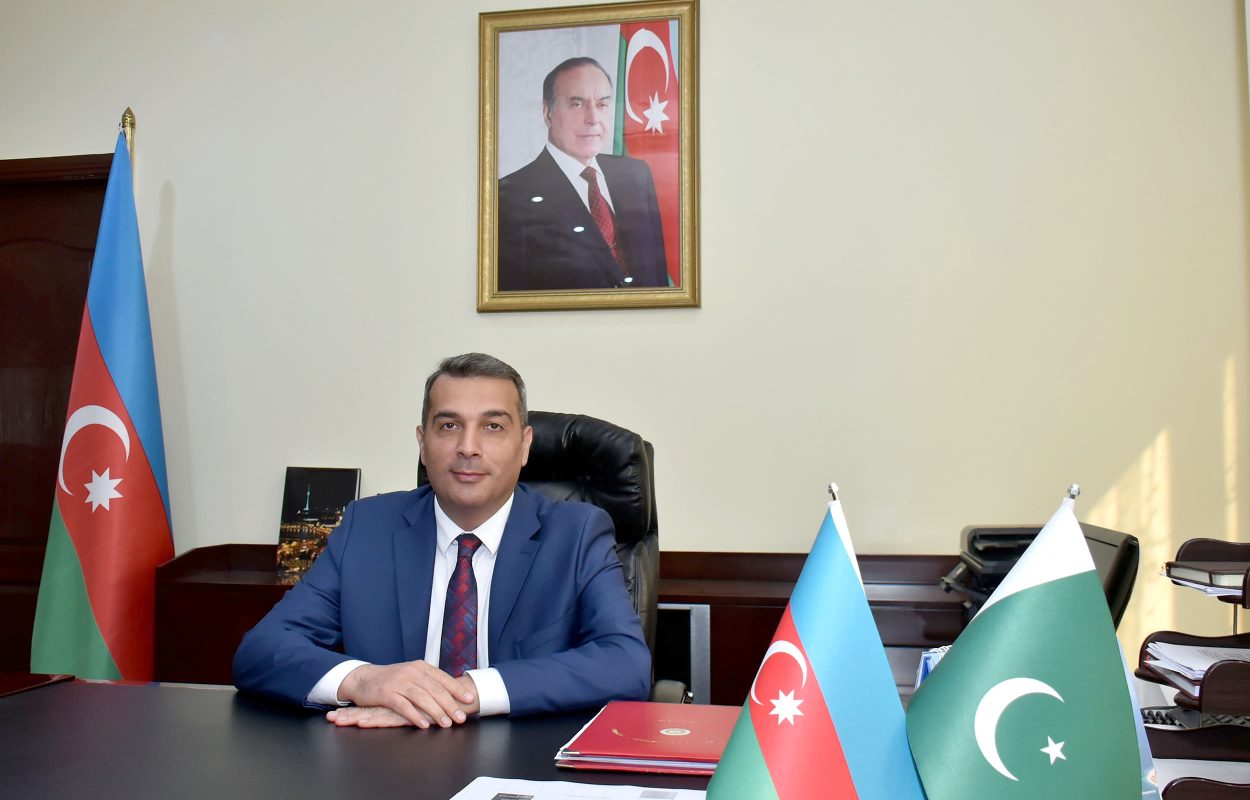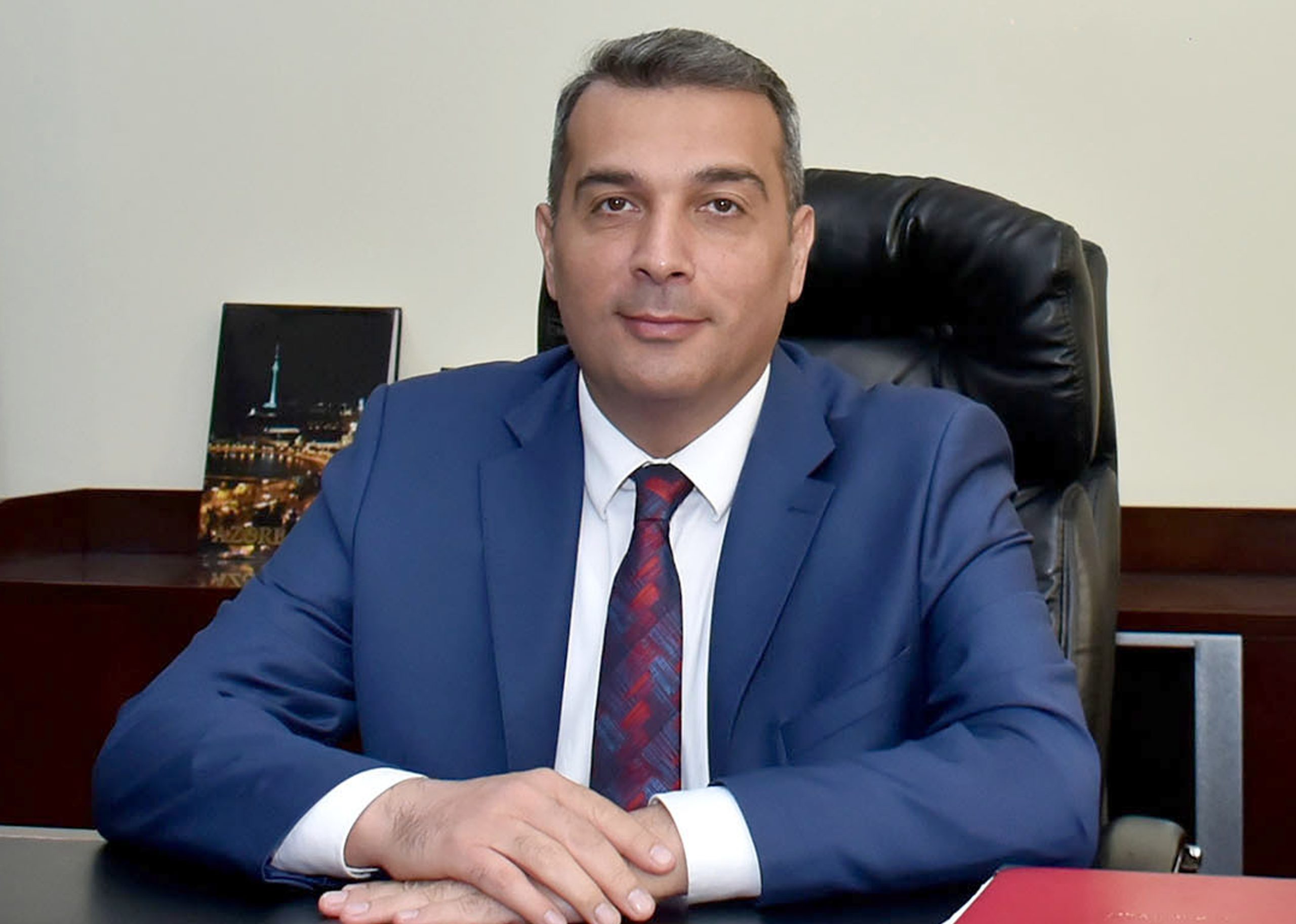
H.E. Mr. Khazar Farhadov (Ambassador of the Republic of Azerbaijan to Pakistan)
What inspired you to pursue a diplomatic career, and what has your journey been like leading up to your current role as Ambassador to Pakistan?
My inspiration to enter diplomacy was shaped during a historic turning point—the early years of Azerbaijan’s restored independence. Seeing our young nation step onto the global stage created a profound desire within me to defend our national interests and represent our culture, history, and sovereign voice internationally.
Driven by this goal, I pursued my foundational education in International Relations at Gazi University in Türkiye, followed by a second degree in International Law from Baku State University. I believed then, as I do now, that a solid grasp of both regional geopolitics and legal frameworks is vital for effective diplomacy.
My journey within the Ministry of Foreign Affairs began in 1997 at the entry level, working as a desk officer. In diplomacy, there are no shortcuts; every step of the ladder offers essential lessons. Over the next two and a half decades, I served in various capacities—from Attaché to Department Head—working extensively within our Asian, African, European and American divisions. Managing the First Asian Affairs Department and later serving as Ambassador-at-Large gave me deep insights into the political, economic, and cultural dynamics of international relations.
In July 2021, His Excellency President Ilham Aliyev honored me with the appointment as the Ambassador of the Republic of Azerbaijan to the Islamic Republic of Pakistan. This role is both the highest responsibility and the greatest privilege of my career.
Pakistan holds a uniquely sacred place in the hearts of the Azerbaijani people. It is a brotherly nation that has stood unconditionally by Azerbaijan through our most challenging times, notably during the 44-day Patriotic War. Today, my primary mission in Islamabad is to translate this deep political brotherhood into stronger economic, trade, and defense ties, ensuring that the strategic partnership between Baku and Islamabad continues to flourish for generations to come.
How would you describe the current state of relations between your country and Pakistan?
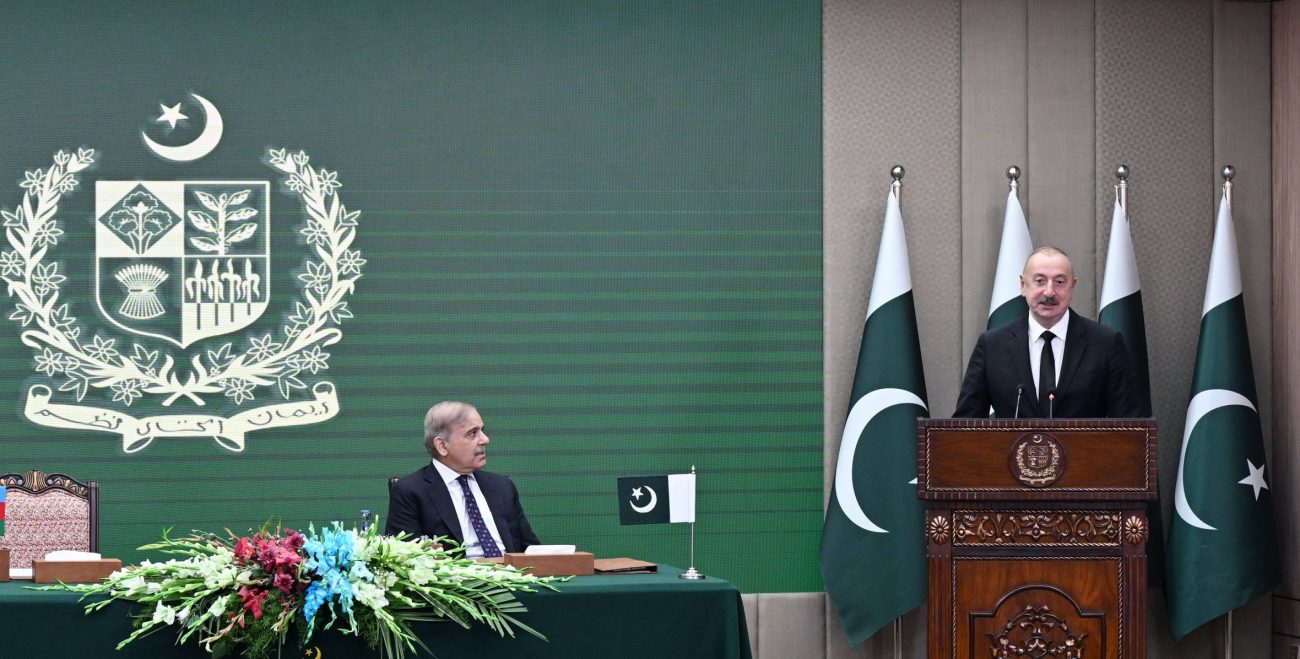
The bilateral relations between Azerbaijan and Pakistan are exceptional and characterized by an unshakeable strategic partnership. A foundational element of this strength is the strong bonds of friendship and mutual trust between our leaders.
In the last five years alone, the intensity of our bilateral relations, the implementation of 6 mutual visits at the highest level, the establishment of direct air communications, the successes achieved in the field of military and defense industry, science and education, research, high technologies, trade, tourism, youth, health and energy the number of citizens visiting between the two countries during the year that has reached almost to 100,000, the establishment of interregional cooperation, collaboration in the international arena, as well as the Azerbaijani-Pakistan-Türkiye trilateral cooperation at the levels of Foreign Ministers, Speakers of Parliaments, and Leaders of the three countries, demonstrates the deep strategic and fraternal nature of the relations which create a powerful center of cooperation and solidarity in the region and beyond.
What are the main areas of cooperation between your country and Pakistan, particularly in trade, investment, and economic development?
The main areas of cooperation span energy, infrastructure, commodity trading, and defense manufacturing. Our bilateral trade profile has undergone a dramatic transformation; over the last five years, our trade turnover has experienced an incredible, multi-fold historic increase heavily driven by strategic trade in LNG, urea, sugar and defense industry products. A crowning achievement of our deep military cooperation is the formal induction of JF-17 Thunder fighter jets into Azerbaijan’s military arsenal, which, alongside our surging trade volumes, underscores the ultimate level of strategic trust between our nations.
How do you see the future of bilateral relations between your country and Pakistan evolving in the coming years?
Looking ahead, I see our relations evolving into an unbreakable geopolitical and economic bloc. Our future will be defined by institutionalized economic integration, deeper trilateral synergy via the Azerbaijan-Pakistan-Türkiye format, and expanded defense production. The strategic alignment of our leadership ensures that our partnership will remain a cornerstone of regional stability and prosperity.
Are there any sectors where you believe collaboration can be further strengthened?
While defense and political ties are at their peak, commercial and regional investment cooperation can be further strengthened. In particular, we see great potential in establishing joint ventures in the trade, energy, infrastructure, defense industry, mining, investment, tourism, textile, connectivity, banking, health, education, public service like Asan Service Center, built recently in Islamabad with Azerbaijan’s model, IT, textiles, pharmaceuticals, and agricultural sectors, as well as joint cooperation in the field of justice.
Can you share any recent initiatives, agreements, or projects that reflect growing cooperation between your country and Pakistan?
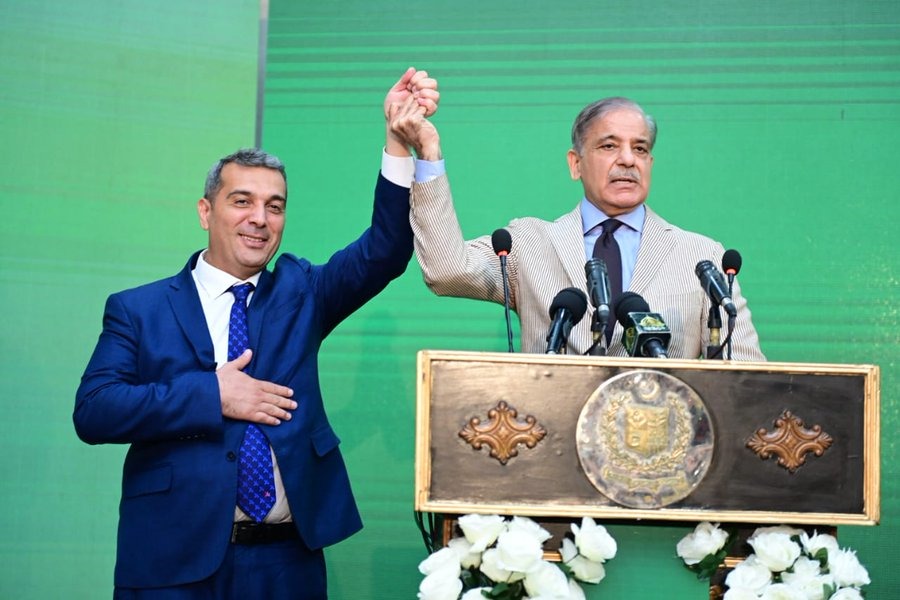
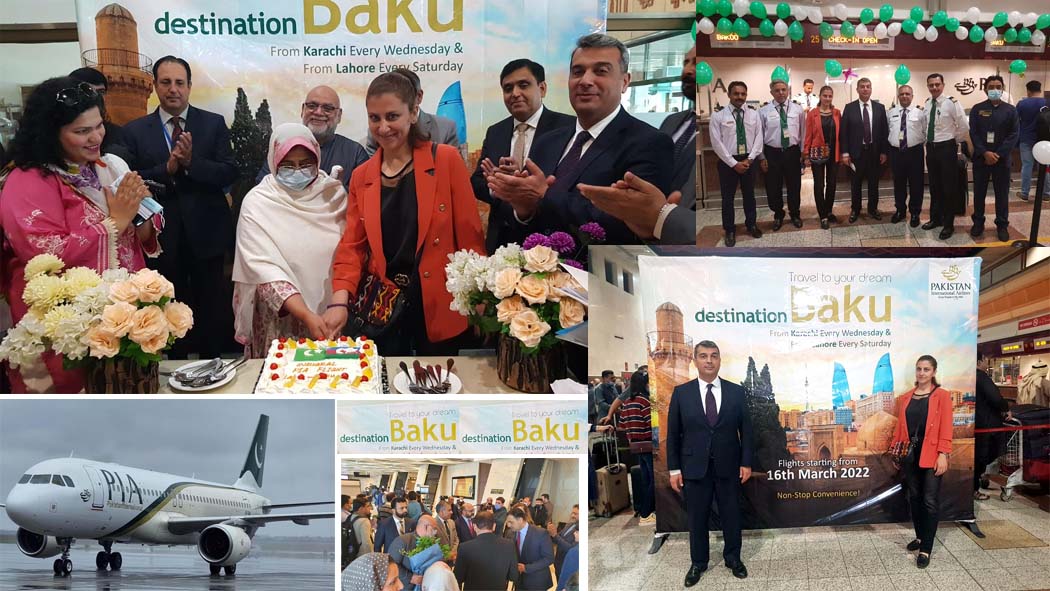
A major historical milestone under recent economic initiatives is that Azerbaijan President’s announcement during last state visit to Pakistan in 2024 to invest 2 billion USD into commercially viable projects in Pakistan have already being transitioned from a strategic vision into active implementation and reality with centric role of SOCAR (State Oil Company of Azerbaijan). Additionally, in public administration, we have seen the establishment of the ASAN Service Center in Islamabad, exporting Azerbaijan’s public service model. Furthermore, we have successfully increased our connectivity, with the number of weekly direct flights between Azerbaijan and Pakistan now reaching 11 by AZAL, PIA and Airblue, acting as a major catalyst for rapid business, trade, and tourism exchanges.
Can you share a notable success story or achievement of your country’s engagement with Pakistan during your tenure?
Thanks to the directives and tireless efforts of the leaders of both nations, if I look back at what we have accomplished together, the true success story is the sweeping, historic breakthrough we have achieved across all pillars of our bilateral relationship. We have successfully converted decades of deep, emotional brotherhood into a highly functional, institutional, and result-oriented strategic partnership.
When you analyze our recent engagements, several monumental achievements stand out as a testament to this progress:
A Historic Leap in Leadership Visits: We have witnessed an unprecedented surge in state-level dynamics, marked by six high-level visits between our country leaders. This political momentum triggered a historic breakthrough: for the first time ever, we organized the official visit of a Pakistani Provincial Chief Minister to Azerbaijan, bridging connections beyond federal capitals directly to key regional economic hubs.
Institutionalizing Bilateral and Trilateral Cooperation: Our institutional framework has been operating at maximum efficiency. We successfully held two rounds of Political Consultations and two sessions of the Joint Intergovernmental Commission in record time, translating policies into concrete action plans. On a grander geopolitical scale, our trilateral cooperation (Azerbaijan-Pakistan-Türkiye) has been elevated directly to the leaders’ level, creating a formidable strategic triangle for regional peace and growth. A glorious and historic testament to this unbreakable bond was witnessed during the 5th Anniversary of Azerbaijan’s Victory Parade in Baku, which was personally attended by the leaders of all three nations. Watching the military contingents of Azerbaijan, Pakistan, and Türkiye marching proudly shoulder to shoulder in the presence of our leaders sent a powerful message of absolute unity, brotherhood, and shared strength to the entire world.
Economic Breakthrough and the Lahore Hub: On the economic front, our bilateral trade volume has multiplied manifold. We laid the legal groundwork for this exponential growth by finalizing and signing both the Preferential Trade Agreement (PTA) and the Transit Trade Agreement (TTA). To give businesses a physical launchpad, we celebrated the opening of the Azerbaijan-Pakistan Joint Chamber of Commerce and Industry in Islamabad and officially inaugurated the Azerbaijan Trade House in Lahore to serve as a primary commercial engine.
Defense and Public Service Innovation: In defense production, our strategic alignment reached a landmark milestone through the historic cooperation and agreement regarding the acquisition of the JF-17 Thunder fighter aircraft. Simultaneously, we looked at governance and public welfare, paving the way for the institutional adaptation and implementation of Azerbaijan’s globally acclaimed ‘ASAN Service’ model to modernize public service delivery systems in Pakistan.
Unprecedented People-to-People Connectivity: True diplomacy belongs to the people, and we have seen a massive leap in human connection. By establishing direct commercial flights connecting Baku with multiple major Pakistani cities, we triggered a massive boom in tourism, student mobility, and business exchanges. This deep human connection was officially institutionalized as the number of sister (twin) cities grew, highlighted by the landmark agreement making Baku and Islamabad official twin capitals.
Every single one of these points—from signed trade treaties and direct flights to defense aircraft and public service centers—proves that the Azerbaijan-Pakistan brotherhood is no longer just a narrative of mutual diplomatic support. It is a living, breathing partnership that has broken all previous records during this period.
What role does your embassy play in promoting cultural exchange and people-to-people connections?
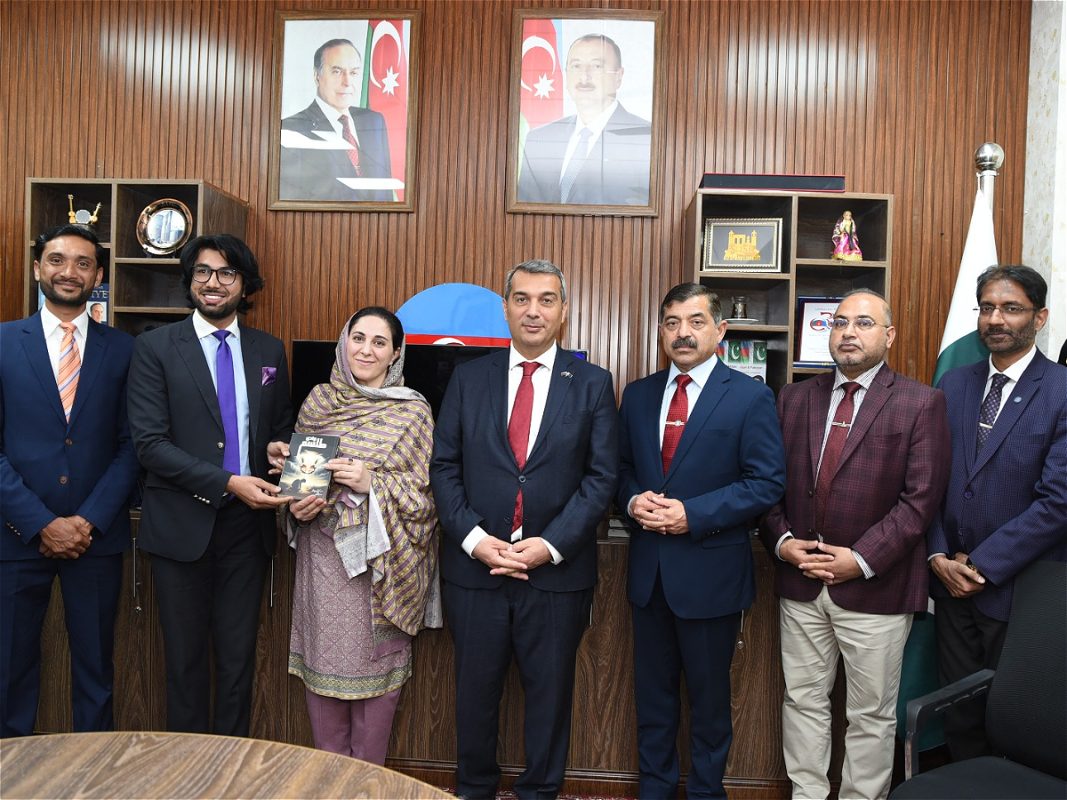
The Embassy plays a pivotal role in fostering educational, cultural, and humanitarian bridges. We are proud to highlight that specialized Azerbaijani academic and cultural corners are actively functioning across Pakistan, including at the National Library of Pakistan, the National Book Foundation of Pakistan, the National University of Modern Languages (NUML), and the Government College University (GCU) Lahore. Furthermore, a dedicated Heydar Aliyev Center is actively operational at the National University of Sciences & Technology (NUST), serving as a hub for research and mutual understanding.
Crucially, a cornerstone of this deep-rooted fraternal bond is the exceptional and historic role of the First Vice-President of Azerbaijan and President of the Heydar Aliyev Foundation, Her Excellency Mehriban Aliyeva who was awarded the Hilal-e-Pakistan order in recognition of her noble works. Under her visionary leadership and personal patronage, the Foundation has carried out unparalleled humanitarian, educational, and healthcare projects across all provinces of Pakistan. From constructing the modern Heydar Aliyev Foundation School for Girls in Rarha (Muzaffarabad) following the devastating earthquake, to implementing massive clean water access initiatives, blood donation camps, and charitable medical programs, Her Excellency Mehriban Aliyeva’s benevolent footprint has touched millions of Pakistani lives. Her immense contributions have transformed Azerbaijan-Pakistan relations from a purely strategic alliance into a deeply emotional, spirit-to-spirit brotherhood that lives in the hearts of the Pakistani people.
Also our Embassy hosted an event showcasing Azerbaijan’s rich cuisine and tourism potential to foreign spouses, diplomats, and Pakistani guests. Led by my spouse, Mrs. Tarana Farhadova, the event highlighted how each Azerbaijani region has its own unique culinary history. Guests tasted authentic dishes and sweets prepared by the Embassy—including Azerbaijani plov, dolma, Shusha Qalyasi, Karabakh kata, and pakhlava. We also held a live masterclass on making traditional dolma and screened videos showcasing our country’s vibrant culture and tourism spots. Such initiatives greatly strengthen the brotherly bonds between our peoples.
How do educational and academic exchanges contribute to strengthening ties between the two nations?
Educational and academic exchanges create a permanent intellectual bridge, which we are actively expanding through structured cooperation between leading universities and think-tanks of both nations to foster joint research, policy analysis, and scholarly interactions. The numerous Memorandums of Understanding (MoUs) signed between our top-tier institutions and think-tanks—such as ANAS, Baku State University, ADA University, Azerbaijan Technical University (AzTU), AIR Center, ISSI, NUML, NUST, Government College University (GCU) Lahore and Quaid-i-Azam University—are not just ceremonial papers; they are active operational roadmaps. While Pakistan hosts multiple Azerbaijani centers, Azerbaijan reciprocates this academic bond beautifully: the Urdu language is actively taught at Baku State University, and a dedicated Pakistan Center successfully operates at the Azerbaijan University of Languages. This mutual linguistic, academic, and think-tank cultivation ensures that our youth and researchers grow up with a deep, structural understanding of each other’s heritage.
‘An effective diplomat today must master both economic, bilateral and multilateral diplomacy.
What has been your personal experience of living and working in Pakistan?
Living and serving in Pakistan has been an incredibly enriching chapter for both myself and my wife, Tarana. Beyond our official duties, we have made it a priority to deeply explore and immerse ourselves in the country’s breathtaking natural beauty and profoundly rich history.
Through our numerous travels across the provinces, we have witnessed firsthand the legendary warmth, hospitality, and friendliness of the Pakistani people. In fact, to truly experience the grand diversity of this beautiful country, Tarana and I have traveled by car from Islamabad to Karachi three separate times. Driving across that vast terrain allowed us to connect directly with local communities and witness the historic, vibrant heartbeat of the nation.
Our journeys took us from the capital city of Islamabad, where we frequently admired the majestic Faisal Mosque and the serene Margalla Hills, through the cultural heartlands of Punjab and Sindh, all the way to the southern coast. We have explored world heritage sites and historical monuments, including the breathtaking Lahore Fort, the Badshahi and Wazir Khan Mosques in Lahore, the ancient, thousands-of-years-old ruins of Taxila, the monumental Rohtas Fort, and the spiritual, historic shrines of Multan. Our travels also led us to the economic hub of Karachi, where we paid respects at Mazar-e-Quaid, passed through Hyderabad, and marveled at the ancient Indus Valley civilization of Mohenjo-daro. In the northwest, we explored Peshawar, taking in the history of the Bala Hisar Fort and the Qissa Khwani Bazaar, as well as the stunning landscapes of the Swat Valley, and visited Muzaffarabad and Skardu and stood in awe of the magnificent, high-altitude wilderness of the Deosai Plateau.
Everywhere we traveled, the local communities welcomed us not as foreigners, but as family, showing us how deeply rooted the love for Azerbaijan is among everyday citizens. For both Tarana and myself, Pakistan feels like a true second home.
What challenges have you encountered during your tenure, and how have you addressed them?
The primary challenge was historically translating our elite political solidarity into everyday economic and logistical realities. We have systematically addressed this by launching 11 weekly direct flights to bridge the geographical gap and by establishing concrete commercial pillars like the Azerbaijan Trade House in Lahore to eliminate market unfamiliarity.
How do you see the role of diplomacy evolving in an increasingly interconnected world?
Diplomacy has evolved far beyond traditional statecraft. It now encompasses defense-industrial integration—as seen in our landmark JF-17 cooperation—and institutionalized sub-national economic partnerships, such as our expanding engagement with the leadership of the Punjab province to drive bilateral investment.
What message would you like to convey to the business community and emerging leaders in Pakistan?
My message is to actively utilize the powerful bilateral mechanisms now at your disposal. Reach out to the Azerbaijan-Pakistan Joint Chamber of Commerce and Industry in Islamabad, visit the Azerbaijan Trade House in Lahore, and leverage our existing weekly 11 direct flights planned to became daily from Islamabad, Lahore and Karachi to Baku in very near future. Azerbaijan’s favorable investment climate, alongside the reconstruction of liberated Karabakh, offers unparalleled horizons for young Pakistani entrepreneurs and established business leaders alike.
What are your hopes for the future of relations between your country and Pakistan?
My ultimate hope is to see our brotherhood cemented as an unbreakable pillar of regional peace and economic dominance. The historical roots of our brotherhood are profound: the National Leader of Azerbaijan, Heydar Aliyev, was the very first Azerbaijani President to pay an official state visit to Pakistan in 1996, laying the indestructible foundation of our modern ties.
This deep historical connection is also immortalized in our architecture, such as the historical 15th-century Multan Caravanserai located in the heart of Baku’s Old City (Icherisheher), which stands as a centuries-old testament to our ancient trade links.
Today, this legacy is actively renewed and institutionalized through newly signed city-to-city cooperation agreements between our key sister cities: Baku and Islamabad, Ganja and Multan, and Nakhchivan and Lahore. Powered by the strong personal friendship of our leaders, the Azerbaijan-Pakistan-Türkiye trilateral alliance, and visible in the skies through our JF-17 jets, our partnership is destined to reach unprecedented heights for the collective prosperity of our brotherly nations.
“Azerbaijan-Pakistan-Türkiye ki Dosti aur Bhaichara hamesha Zindabad!”
“May the friendship and brotherhood of Azerbaijan-Pakistan-Türkiye live forever!”